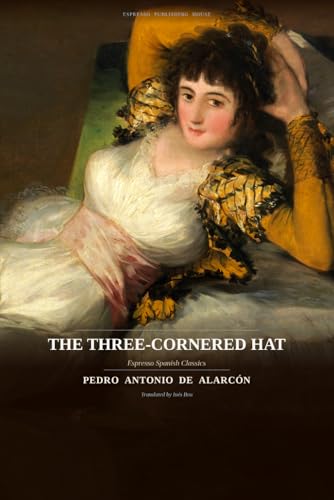
The Three-Cornered Hat: A Novella
Uitgelicht
|
11,68 |
Naar shop
|
|
11,68 |
Naar shop
|
|
12,50 |
Naar shop
|
Beschrijving
Bol
The ballet is famous. The novella that inspired it has never had a modern literary English edition. Until now. In a small Andalusian town, sometime in the early 1800s, the Corregidor, a short, round-shouldered magistrate whose authority is the law and whose person is ridiculous, has decided he wants the miller's wife. She is beautiful, confident, and entirely unintimidated. Her husband is watchful. The night that follows is a comedy of sexual corruption, disguise, and the nature of power, built on a folk tale as old as the hills and timed with the precision of a watch. Inés Bou's translation is the first modern literary English edition. It restores what older translations dissolved: the Andalusian forms of address that mark a working-class miller and his wife as people of standing in their village ( Tío Lucas, señá Frasquita, not Mr. and Mrs.), the Corregidor's mock-pompous officialese, the Andalusian proverbs preserved in their force ("uglier than Picio"), the social world in which a three-cornered hat is not merely a costume but a demonstration about what power is made of and who it belongs to. At the centre of it all: a three-cornered hat, left behind at the wrong house, put on in the dark by the wrong man, and every encounter that follows. Pedro Antonio de Alarcón (1833-1891) was born in Guadix, in the deep south of Spain, and grew up inside the Andalusian social world his fiction describes with such precision. El sombrero de tres picos (1874) is his best-known work: a short, sharp comedy of authority, the source of Manuel de Falla's 1919 ballet, with sets and costumes by Picasso and choreography by Massine. It is 120 pages long and has been entertaining audiences for a century and a half. Alarcón intended both facts. For readers of Voltaire, Stendhal, and Nikolai Gogol.
AmazonPages: 168, Paperback, Independently published
Prijshistorie
* Prijshistorie bevat geen data van Amazon, Amazon Marketplace.
Prijzen voor het laatst bijgewerkt op: