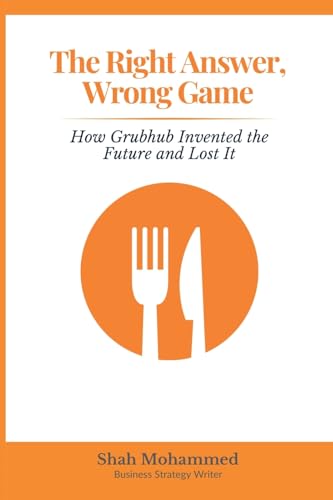
The Right Answer, Wrong Game
Uitgelicht
|
10,50 |
Naar shop
|
|
32,57 |
Naar shop
|
Beschrijving
Bol
Grubhub didn't fail because it was poorly run.It failed because it was disciplined in an era that rewarded recklessness, profitable in a category that punished profitability, and correct about the economics of its industry at precisely the moment when being correct delivered no competitive advantage whatsoever.In 2004, two software developers in Chicago replaced a drawer full of paper menus with a website and built the first profitable online food ordering marketplace in America. For a decade, Grubhub was the smartest company in the room - capital-light, margin-rich, and beloved by Wall Street. At its peak, it was worth $12 billion.By early 2025, it sold for the equivalent of roughly $50 million in actual cash. Nine cents on the dollar.This is the story of how that happened - and why it keeps happening to companies just like it.Not a disruption narrative. Not a simple founder cautionary tale. Something more unsettling: a forensic examination of how a genuinely well-run business can lose everything while doing almost everything right. Any strategist, executive, or entrepreneur navigating a market where the rules are shifting faster than their instincts will find Grubhub's story uncomfortably familiar.Being right, eventually, is not the same as winning.This book was researched and written in collaboration with artificial intelligence. The analysis, arguments, and strategic judgements are the author's own.
AmazonPages: 94, Paperback, Shah Mohammed
Prijzen voor het laatst bijgewerkt op: