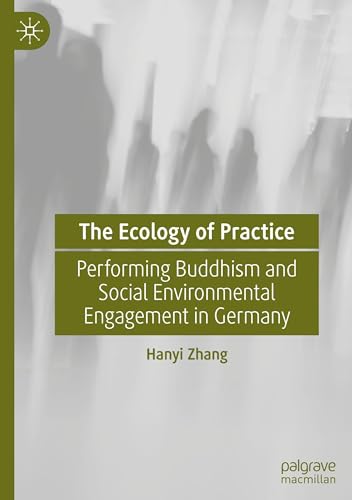
The Ecology of Practice

Prijzen vanaf
145,00

Uitgelicht


Beschrijving

Bol This book offers a well-grounded ethnographic analysis of the ecological practices of Buddhists in Germany, demonstrating how traditional teachings are connected with contemporary environmental engagement. This book offers a well-grounded ethnographic analysis of the ecological practices of Buddhists in Germany, demonstrating how traditional teachings are connected with contemporary environmental engagement. It shows how Buddhist groups, such as the Order of Interbeing, XR Buddhists, or Fo Guang Shan, respond to climate change by turning mindfulness, compassion, and performative rituals into concrete social and ecological action. Key themes include the integration of Buddhist ethics into everyday ecological practices, the transformation of spiritual identity through embodied and symbolic action, and the role of religion in fostering social-ecological change. Drawing on interviews and participant observation, the author analyzes how Buddhist communities adapt their practices to current challenges while generating new forms of ecological spirituality in the process. This volume is particularly significant in the context of global environmental crises, as it shows that religion is not a refuge from the world but a powerful resource for collective transformation. The book fills a gap in the literature by theoretically framing and empirically investigating the previously under-researched field of German-language eco-Buddhism with perspectives from performativity theory and epistemic entanglement. It is an important read for scholars in the fields of religious studies, social and cultural anthropology, environmental ethics, and Buddhist studies, as well as practitioners engaged in interreligous or ecological movements.

Vergelijk aanbieders (1)

Shop
Prijs
Verzendkosten
Totale prijs
145,00
Gratis
145,00
Naar shop
Gratis Shipping Costs
Beschrijving (1)

This book offers a well-grounded ethnographic analysis of the ecological practices of Buddhists in Germany, demonstrating how traditional teachings are connected with contemporary environmental engagement. This book offers a well-grounded ethnographic analysis of the ecological practices of Buddhists in Germany, demonstrating how traditional teachings are connected with contemporary environmental engagement. It shows how Buddhist groups, such as the Order of Interbeing, XR Buddhists, or Fo Guang Shan, respond to climate change by turning mindfulness, compassion, and performative rituals into concrete social and ecological action. Key themes include the integration of Buddhist ethics into everyday ecological practices, the transformation of spiritual identity through embodied and symbolic action, and the role of religion in fostering social-ecological change. Drawing on interviews and participant observation, the author analyzes how Buddhist communities adapt their practices to current challenges while generating new forms of ecological spirituality in the process. This volume is particularly significant in the context of global environmental crises, as it shows that religion is not a refuge from the world but a powerful resource for collective transformation. The book fills a gap in the literature by theoretically framing and empirically investigating the previously under-researched field of German-language eco-Buddhism with perspectives from performativity theory and epistemic entanglement. It is an important read for scholars in the fields of religious studies, social and cultural anthropology, environmental ethics, and Buddhist studies, as well as practitioners engaged in interreligous or ecological movements.


Productspecificaties

EAN
  • 9783032178138
Maat


Prijshistorie

Prijzen voor het laatst bijgewerkt op:

Uitgelichte Keuze
145,00
Naar shop