








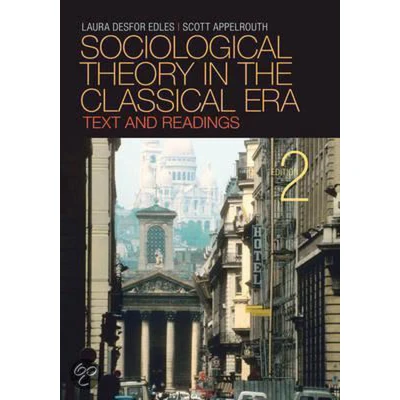
Sociological Theory In The Classical Era
Uitgelicht

|
28,09 |
Naar shop
|
 Beschrijving
Bol Partner
This book is a hybrid of text and readings, providing both original, major writings of sociology's key classical theorists and a theoretical and historical framework, written by Edles/Applerouth, with which to better understand the readings. This is a major difference from the traditional reader which can leave students unmotivated when readings are thrown at them one after another with no interpretive guidance or analytical framework. Features/Benefits include: text plus readings in a 'hybrid form'. The text will provides the interpretive and analytical guidance necessary to interpret the readings. It includes a 30 page introduction (Chapter 1) , 8-14 page introductions in each chapter, 1-2 page article introductions, and a 10-15 page conclusion at the end of the book; 'Theoretical Orientation Diagrams' and 'Core Concepts Diagrams' provide students a means to fit the theorist under study into the broader universe of social theory; 'Significant Others' boxes provide information and biographies on theorists who may have followed and derived much of their own perspective from the major theorists featured in each chapter; and, discussion questions at the ends of chapters. New to this Edition: at least 7 new 'Significant Others' boxes; each chapter updated with new examples; new readings added to Weber, Marx, and Durkheim chapters; and, new chronological order for readings where possible (where not possible - i.e. it does not fit the logical thematic to do so there will be an explanation in the introduction as to why the readings are ordered the way they are).


Vergelijk aanbieders (1)

 Beschrijving
(1)
Beschrijving
(1)
This book is a hybrid of text and readings, providing both original, major writings of sociology's key classical theorists and a theoretical and historical framework, written by Edles/Applerouth, with which to better understand the readings. This is a major difference from the traditional reader which can leave students unmotivated when readings are thrown at them one after another with no interpretive guidance or analytical framework. Features/Benefits include: text plus readings in a 'hybrid form'. The text will provides the interpretive and analytical guidance necessary to interpret the readings. It includes a 30 page introduction (Chapter 1) , 8-14 page introductions in each chapter, 1-2 page article introductions, and a 10-15 page conclusion at the end of the book; 'Theoretical Orientation Diagrams' and 'Core Concepts Diagrams' provide students a means to fit the theorist under study into the broader universe of social theory; 'Significant Others' boxes provide information and biographies on theorists who may have followed and derived much of their own perspective from the major theorists featured in each chapter; and, discussion questions at the ends of chapters. New to this Edition: at least 7 new 'Significant Others' boxes; each chapter updated with new examples; new readings added to Weber, Marx, and Durkheim chapters; and, new chronological order for readings where possible (where not possible - i.e. it does not fit the logical thematic to do so there will be an explanation in the introduction as to why the readings are ordered the way they are).
 Productspecificaties
| EAN |
|
|---|---|
| Maat |
|
 Prijshistorie
Prijzen voor het laatst bijgewerkt op:
 Gerelateerde resultaten


