








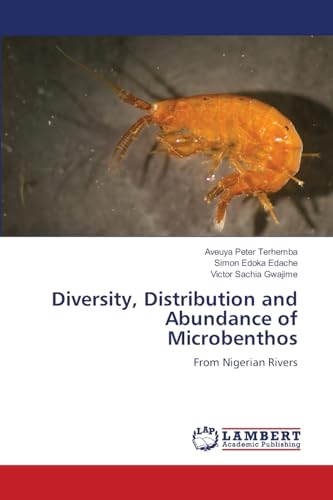
Diversity, Distribution and Abundance of Microbenthos
Uitgelicht

|
39,99 |
Naar shop
|

|
41,80 |
Naar shop
|
 Beschrijving
Bol
This study investigates the distribution and abundance of macrobenthos in the Nigerian Rivers specifically Calabar River, focusing on how environmental and biological factors influence these communities. A total of 505 species were collected across seven major taxa, with an overall mean density of 251±53.73 individuals. The Insecta class was the most abundant, comprising 43.63% of the total, followed by Gastropoda and Echinodermata. Using electronic microscopy for identification, statistical analyses revealed a Simpson diversity index of 1.58±0.04 and a Shannon diversity index of 0.74±0.01. Key physiochemical parameters included a pH of 8.51±2.06, salinity of 7.7±0.31, a temperature mean of 25.15±0.5, and dissolved oxygen at 6.7±0.28. The findings indicate that the water quality supports a diverse range of species, highlighting the need for balanced salinity and good oxygenation to maintain biodiversity in estuarine systems. Regular monitoring of water quality is essential to detect pollution early, and implementing waste management strategies can help reduce organic loads in the river.


 Beschrijving
(2)
Beschrijving
(2)
This study investigates the distribution and abundance of macrobenthos in the Nigerian Rivers specifically Calabar River, focusing on how environmental and biological factors influence these communities. A total of 505 species were collected across seven major taxa, with an overall mean density of 251±53.73 individuals. The Insecta class was the most abundant, comprising 43.63% of the total, followed by Gastropoda and Echinodermata. Using electronic microscopy for identification, statistical analyses revealed a Simpson diversity index of 1.58±0.04 and a Shannon diversity index of 0.74±0.01. Key physiochemical parameters included a pH of 8.51±2.06, salinity of 7.7±0.31, a temperature mean of 25.15±0.5, and dissolved oxygen at 6.7±0.28. The findings indicate that the water quality supports a diverse range of species, highlighting the need for balanced salinity and good oxygenation to maintain biodiversity in estuarine systems. Regular monitoring of water quality is essential to detect pollution early, and implementing waste management strategies can help reduce organic loads in the river.
AmazonPages: 56, Paperback, LAP Lambert Academic Publishing
 Productspecificaties
 Prijshistorie
* Prijshistorie bevat geen data van Amazon.
Prijzen voor het laatst bijgewerkt op:
 Gerelateerde resultaten


