
Death, and Afterwards
Uitgelicht

|
7,00 |
Naar shop
|

|
7,00 |
Naar shop
|

|
9,00 |
Naar shop
|
| VERGELIJK ALLE AANBIEDERS (3) | ||
 Beschrijving
Bol
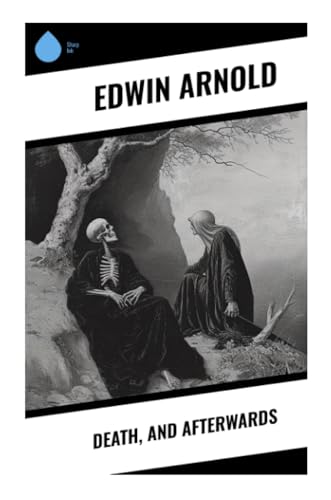
In Death, and Afterwards, Edwin Arnold meditates on mortality not as an abrupt negation but as a threshold into enlarged spiritual being. Written in a reflective, elevated prose-poetic manner, the work combines Victorian elegiac solemnity with Arnold's characteristic interest in comparative religion and moral consolation. Its literary context is the late nineteenth-century preoccupation with faith, science, bereavement, and immortality, yet its tone is less doctrinal than contemplative, seeking harmony between Eastern and Western intuitions of the soul's persistence. Arnold, best known for The Light of Asia, was a poet, journalist, and cultural mediator whose writings introduced many English readers to Buddhist and Hindu thought. His long engagement with Asia, his editorial career, and his sensitivity to religious pluralism helped shape a mind drawn to questions of destiny, suffering, and transcendence. Death, and Afterwards reflects the mature Arnold's desire to speak beyond sectarian boundaries while preserving the dignity of spiritual hope. This book is recommended to readers interested in Victorian literature, comparative spirituality, and the history of ideas about the afterlife. It will especially reward those who value meditative writing that treats death with intellectual seriousness, emotional restraint, and humane consolation.


 Beschrijving
(1)
Beschrijving
(1)
In Death, and Afterwards, Edwin Arnold meditates on mortality not as an abrupt negation but as a threshold into enlarged spiritual being. Written in a reflective, elevated prose-poetic manner, the work combines Victorian elegiac solemnity with Arnold's characteristic interest in comparative religion and moral consolation. Its literary context is the late nineteenth-century preoccupation with faith, science, bereavement, and immortality, yet its tone is less doctrinal than contemplative, seeking harmony between Eastern and Western intuitions of the soul's persistence. Arnold, best known for The Light of Asia, was a poet, journalist, and cultural mediator whose writings introduced many English readers to Buddhist and Hindu thought. His long engagement with Asia, his editorial career, and his sensitivity to religious pluralism helped shape a mind drawn to questions of destiny, suffering, and transcendence. Death, and Afterwards reflects the mature Arnold's desire to speak beyond sectarian boundaries while preserving the dignity of spiritual hope. This book is recommended to readers interested in Victorian literature, comparative spirituality, and the history of ideas about the afterlife. It will especially reward those who value meditative writing that treats death with intellectual seriousness, emotional restraint, and humane consolation.
 Productspecificaties
 Prijshistorie
* Prijshistorie bevat geen data van Amazon, Amazon Marketplace.
Prijzen voor het laatst bijgewerkt op:
 Gerelateerde resultaten


