
Critical care eeg monitoring
Uitgelicht

|
146,99 |
Naar shop
|
|
160,49 |
Naar shop
|
| VERGELIJK ALLE AANBIEDERS (2) | ||
 Beschrijving
Bol
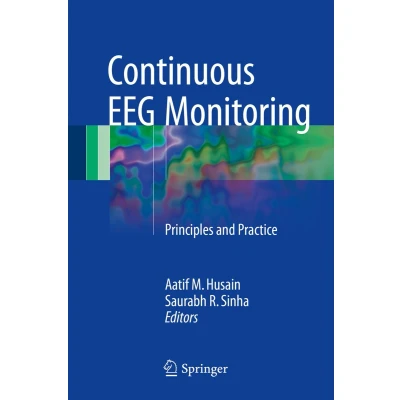
This book is designed to meet the need for a practically oriented textbook on the rapidly growing field of continuous EEG (cEEG) monitoring. This book is designed to meet the need for a practically oriented textbook on the rapidly growing field of continuous EEG (cEEG) monitoring. A wide range of key clinical aspects are addressed, with explanation of status epilepticus classification, criteria for institution of monitoring, seizure patterns and their recognition, quantitative EEG analysis, and neuroimaging in patients undergoing cEEG monitoring. The value of cEEG and the nature of cEEG findings in various special situations are then reviewed, covering particular pathologies, critical care considerations, and prognostication. Treatments of nonconvulsive status epilepticus (NCSE) and nonconvulsive seizures (NCS) are discussed. The concluding section is devoted to important administrative issues including billing, staffing issues, comparison of EEG machines, and information technology (IT) issues.Continuous EEG monitoring offers the only reliable means of detecting seizures that are not clinically obvious in critically ill patients. Such seizures are common: approximately 20% of patients undergoing cEEG monitoring in hospital have NCSE or NCS. Against this background, many hospitals have started to offer cEEG monitoring as a basis for delivery of appropriate treatment. By presenting the state of the art in cEEG monitoring, this book will be invaluable to practitioners including neurophysiologists, neurologists, neurointensivists, intensivists, neurophysiology and epilepsy fellows, and neurology residents. This book is designed to meet the need for a practically oriented textbook on the rapidly growing field of continuous EEG (cEEG) monitoring. A wide range of key clinical aspects are addressed, with explanation of status epilepticus classification, criteria for institution of monitoring, seizure patterns and their recognition, quantitative EEG analysis, and neuroimaging in patients undergoing cEEG monitoring. The value of cEEG and the nature of cEEG findings in various special situations are then reviewed, covering particular pathologies, critical care considerations, and prognostication. Treatments of nonconvulsive status epilepticus (NCSE) and nonconvulsive seizures (NCS) are discussed. The concluding section is devoted to important administrative issues including billing, staffing issues, comparison of EEG machines, and information technology (IT) issues.Continuous EEG monitoring offers the only reliable means of detecting seizures that are not clinically obvious in critically ill patients. Such seizures are common: approximately 20% of patients undergoing cEEG monitoring in hospital have NCSE or NCS. Against this background, many hospitals have started to offer cEEG monitoring as a basis for delivery of appropriate treatment. By presenting the state of the art in cEEG monitoring, this book will be invaluable to practitioners including neurophysiologists, neurologists, neurointensivists, intensivists, neurophysiology and epilepsy fellows, and neurology residents.


 Beschrijving
(2)
Beschrijving
(2)
This book is designed to meet the need for a practically oriented textbook on the rapidly growing field of continuous EEG (cEEG) monitoring. This book is designed to meet the need for a practically oriented textbook on the rapidly growing field of continuous EEG (cEEG) monitoring. A wide range of key clinical aspects are addressed, with explanation of status epilepticus classification, criteria for institution of monitoring, seizure patterns and their recognition, quantitative EEG analysis, and neuroimaging in patients undergoing cEEG monitoring. The value of cEEG and the nature of cEEG findings in various special situations are then reviewed, covering particular pathologies, critical care considerations, and prognostication. Treatments of nonconvulsive status epilepticus (NCSE) and nonconvulsive seizures (NCS) are discussed. The concluding section is devoted to important administrative issues including billing, staffing issues, comparison of EEG machines, and information technology (IT) issues.Continuous EEG monitoring offers the only reliable means of detecting seizures that are not clinically obvious in critically ill patients. Such seizures are common: approximately 20% of patients undergoing cEEG monitoring in hospital have NCSE or NCS. Against this background, many hospitals have started to offer cEEG monitoring as a basis for delivery of appropriate treatment. By presenting the state of the art in cEEG monitoring, this book will be invaluable to practitioners including neurophysiologists, neurologists, neurointensivists, intensivists, neurophysiology and epilepsy fellows, and neurology residents. This book is designed to meet the need for a practically oriented textbook on the rapidly growing field of continuous EEG (cEEG) monitoring. A wide range of key clinical aspects are addressed, with explanation of status epilepticus classification, criteria for institution of monitoring, seizure patterns and their recognition, quantitative EEG analysis, and neuroimaging in patients undergoing cEEG monitoring. The value of cEEG and the nature of cEEG findings in various special situations are then reviewed, covering particular pathologies, critical care considerations, and prognostication. Treatments of nonconvulsive status epilepticus (NCSE) and nonconvulsive seizures (NCS) are discussed. The concluding section is devoted to important administrative issues including billing, staffing issues, comparison of EEG machines, and information technology (IT) issues.Continuous EEG monitoring offers the only reliable means of detecting seizures that are not clinically obvious in critically ill patients. Such seizures are common: approximately 20% of patients undergoing cEEG monitoring in hospital have NCSE or NCS. Against this background, many hospitals have started to offer cEEG monitoring as a basis for delivery of appropriate treatment. By presenting the state of the art in cEEG monitoring, this book will be invaluable to practitioners including neurophysiologists, neurologists, neurointensivists, intensivists, neurophysiology and epilepsy fellows, and neurology residents.
FnacCollectif (Auteur) - Verschenen op 12/01/2017 bij Springer Libri
 Productspecificaties
 Prijshistorie
Prijzen voor het laatst bijgewerkt op:
 Gerelateerde resultaten


